 GoodStudy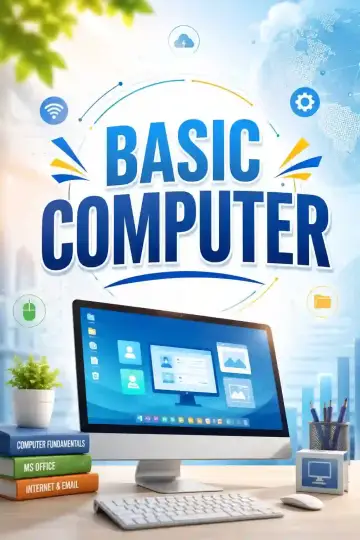
Handwritten notes
Illustrated, exam-focused notes for quick understanding.
Hardware, software, MS Office and the internet — computer basics for exams.
Basic computer knowledge is now part of most state and central exams. It covers computer fundamentals, operating systems, MS Office, the internet, networking and cyber security.
Charles Babbage is called the father of the computer.
The CPU (ALU + Control Unit) is called the brain of the computer.
1 byte = 8 bits; 1 KB = 1024 bytes.
RAM is volatile (loses data when power is off); ROM is non-volatile.
Windows, Linux, macOS and Android are operating systems.
Shortcuts: Ctrl+C copy, Ctrl+V paste, Ctrl+Z undo, Ctrl+S save.
In MS Excel, every formula begins with "=".
HTTP = HyperText Transfer Protocol; URL = Uniform Resource Locator.
The World Wide Web was invented by Tim Berners-Lee in 1989.
LAN, MAN and WAN are network types based on the area they cover.
A firewall protects a network from unauthorised access.
Phishing is a cyber attack that steals personal information through fake messages or websites.
SSC-level notes — tap a topic to open it.
Full chapter notes, mind maps, topic-wise quizzes and mock tests for every subject — one Pro plan unlocks them all.
Learn concepts with a computer open — try each MS Office feature yourself.
Make a list of shortcut keys and common abbreviations.
Understand memory units and conversions.
Practise previous-year style MCQs regularly.
Shortcut keys and full forms are almost guaranteed questions — revise them daily in the last week.
Illustrated, exam-focused notes for quick understanding.
Revise whole topics at a glance before the exam.
Practise each topic with instant scores and explanations.
Fresh questions every day to keep revision consistent.