 GoodStudy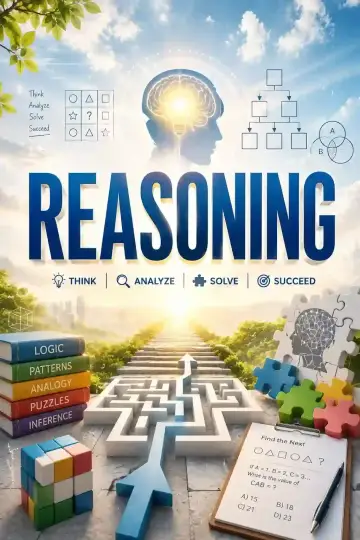
Handwritten notes
Illustrated, exam-focused notes for quick understanding.
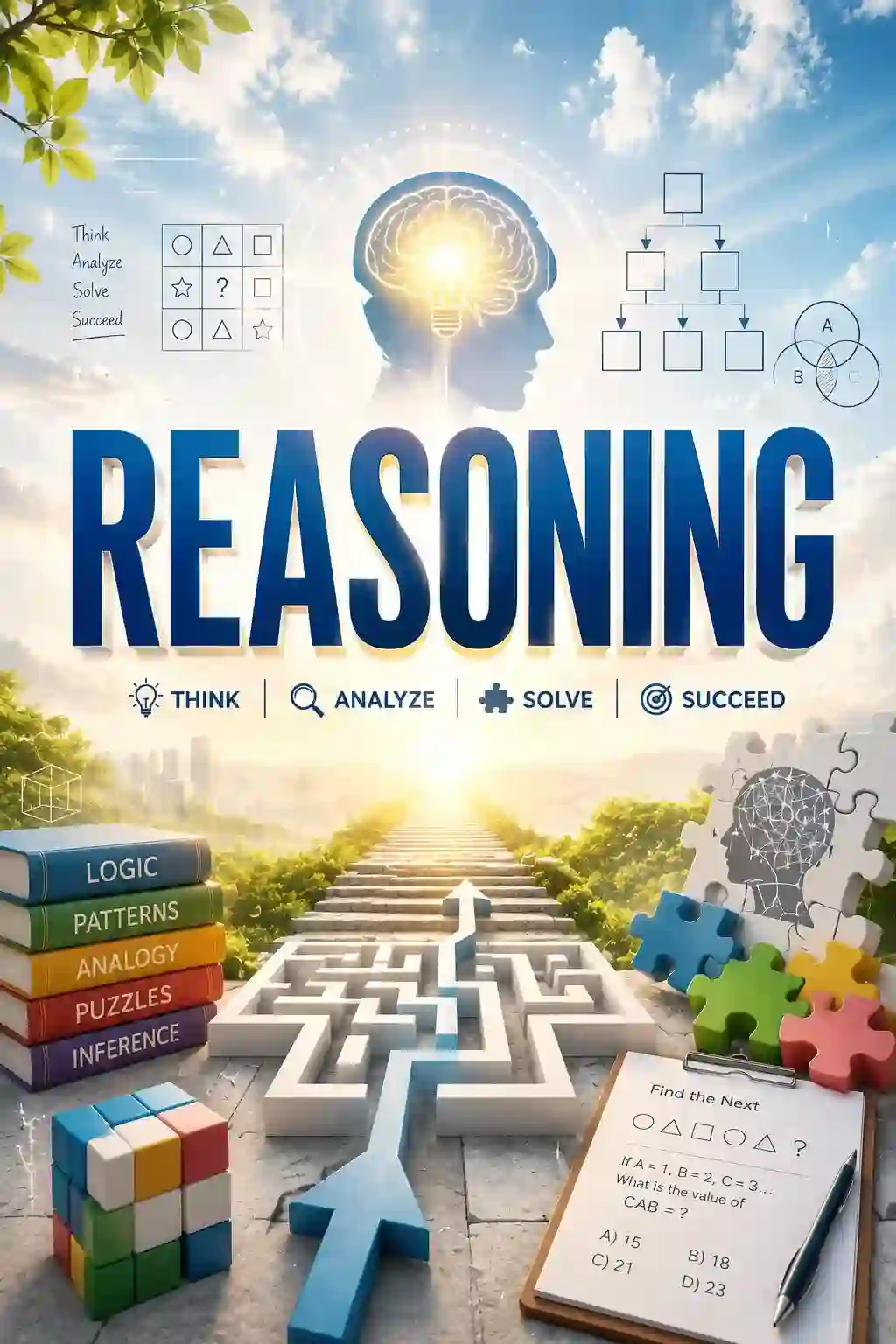
Logic, patterns and puzzles — the most scoring section.
Reasoning tests logical and analytical thinking through verbal and non-verbal questions. With regular practice it becomes the fastest and most scoring section of the paper.
Letter positions: A=1, E=5, J=10, O=15, T=20, Y=25 — remember "EJOTY".
Opposite letters (A–Z, B–Y …) always have position values that add up to 27.
Clockwise, the directions are North → East → South → West.
In the morning, your shadow falls towards the west.
In a syllogism, "All A are B" does not mean "All B are A".
For blood relations, draw a family tree with symbols (+ male, − female).
In coding–decoding, first check letter shifts (+1, −1) and reverse positions.
For number series, check differences first, then ratios, then squares and cubes.
Clock angle = |30H − 5.5M| degrees.
Odd days: an ordinary year has 1 odd day and a leap year has 2.
Total persons in a row = rank from top + rank from bottom − 1.
Opposite faces of a standard die always add up to 7.
SSC-level notes — tap a topic to open it.
Full chapter notes, mind maps, topic-wise quizzes and mock tests for every subject — one Pro plan unlocks them all.
Learn the approach for each question type before speed practice.
Memorise alphabet positions (A=1 … Z=26) and their reverse.
Practise puzzles and seating arrangement daily — they need rhythm.
Analyse every mock: note which question types cost you time.
Attempt reasoning first in the exam — quick, accurate marks give you confidence for the rest.
Illustrated, exam-focused notes for quick understanding.
Revise whole topics at a glance before the exam.
Practise each topic with instant scores and explanations.
Fresh questions every day to keep revision consistent.