 GoodStudy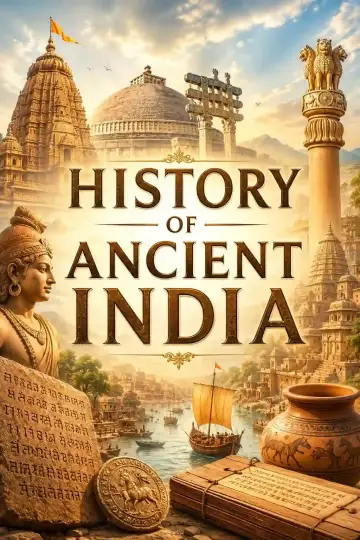
Handwritten notes
Illustrated, exam-focused notes for quick understanding.
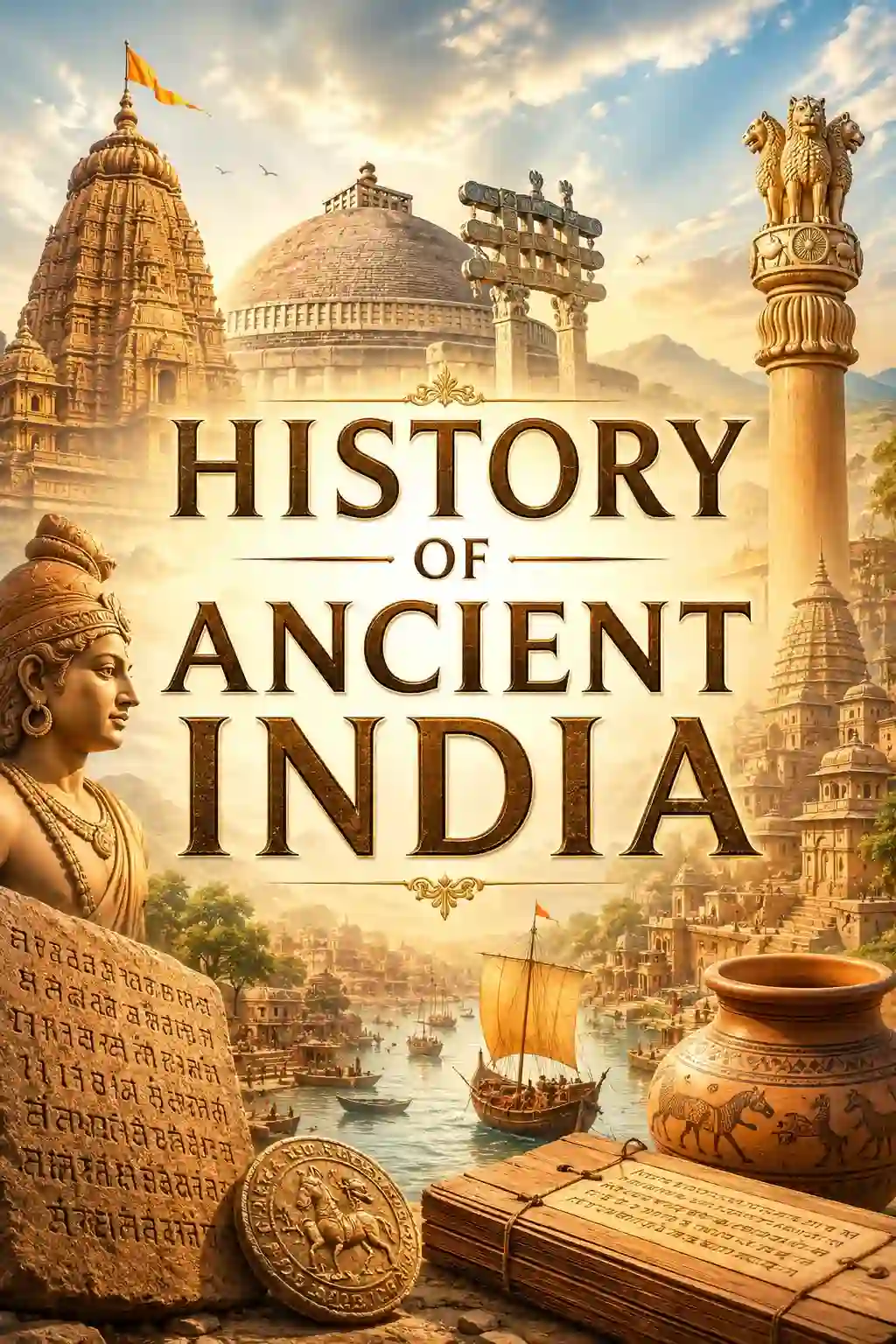
From the Indus Valley to the Guptas — the foundations of Indian civilisation.
Ancient Indian history traces how society, religion, kingdoms and culture took shape from prehistoric times to the early medieval period. It is a steady source of questions on dynasties, rulers, texts, art and religious movements.
The Indus Valley Civilisation (c. 2500–1750 BCE) was a Bronze Age urban civilisation; Harappa was excavated first, in 1921, by Daya Ram Sahni.
Mohenjo-daro (excavated in 1922 by R.D. Banerji) is famous for the Great Bath.
Lothal in Gujarat had the earliest known dockyard.
The Rigveda is the oldest Veda — it has 10 mandalas.
The Gayatri Mantra is in the third mandala of the Rigveda and is addressed to Savitri.
Gautama Buddha attained enlightenment at Bodh Gaya and gave his first sermon at Sarnath.
Mahavira, the 24th Jain Tirthankara, was born at Kundagrama near Vaishali.
Chandragupta Maurya founded the Mauryan Empire around 321 BCE with the help of Chanakya.
Ashoka turned to Buddhism after the Kalinga War (c. 261 BCE).
Megasthenes, the Greek envoy at Chandragupta Maurya's court, wrote Indica.
The Gupta period is called the "Golden Age"; Aryabhata and Kalidasa belong to this era.
Chinese pilgrim Fa-Hien visited India under Chandragupta II, and Hiuen Tsang under Harshavardhana.
SSC-level notes — tap a topic to open it.
Full chapter notes, mind maps, topic-wise quizzes and mock tests for every subject — one Pro plan unlocks them all.
Build a timeline first — period, dynasty, founder and capital — before going into details.
Group facts by theme: religion, art & architecture, literature and administration.
Use a mind map for each dynasty to connect rulers, events and monuments.
Finish every chapter with topic-wise MCQs and revise the questions you got wrong.
Most questions are factual — founders, capitals, texts and authors. Keep a one-page fact sheet per dynasty for last-day revision.
Illustrated, exam-focused notes for quick understanding.
Revise whole topics at a glance before the exam.
Practise each topic with instant scores and explanations.
Fresh questions every day to keep revision consistent.