 GoodStudy
Handwritten notes
Illustrated, exam-focused notes for quick understanding.
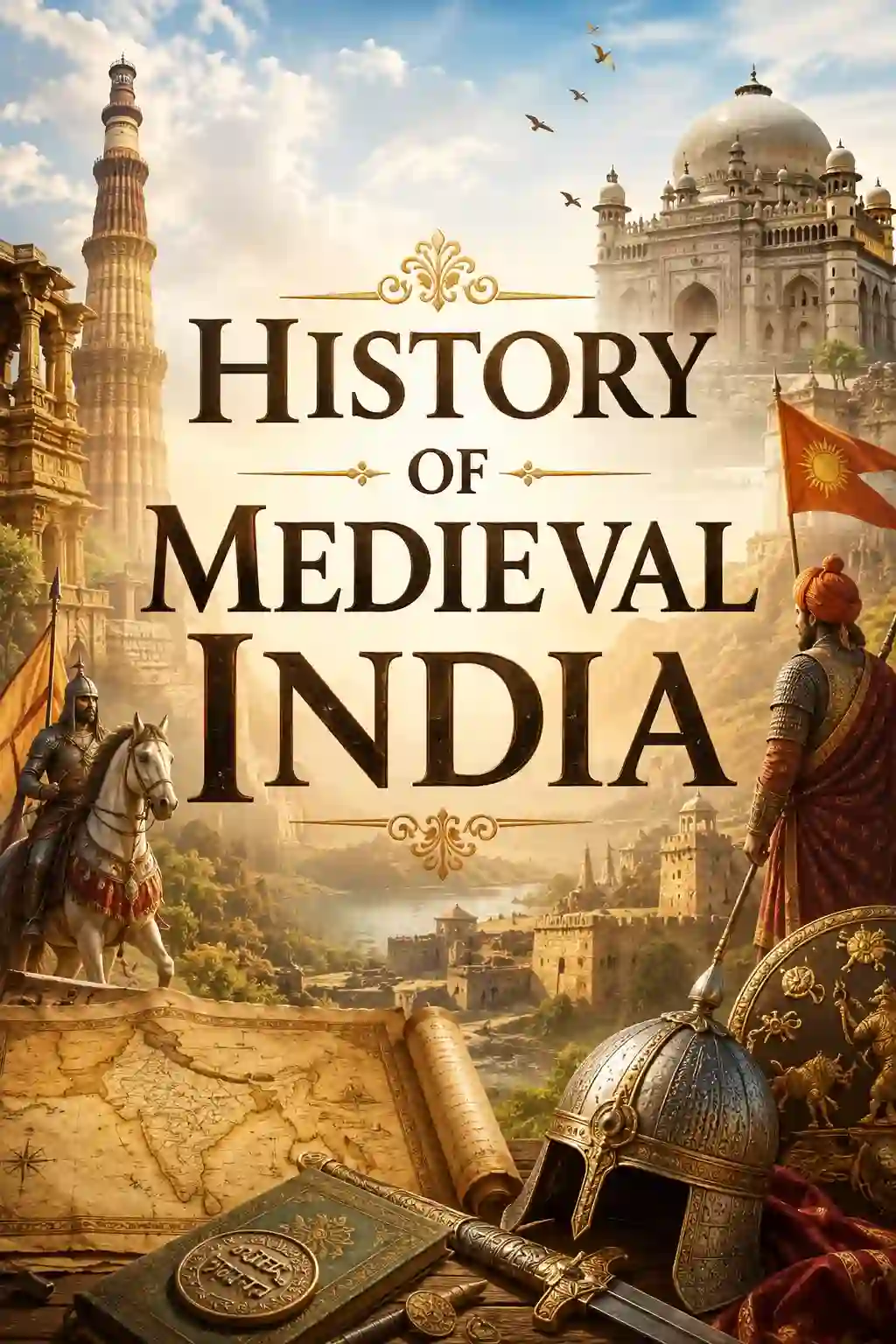
Sultanates, empires and the Bhakti–Sufi movements that reshaped India.
Medieval Indian history covers the period from the early Rajput kingdoms to the decline of the Mughals. Exams focus on dynasties, administration, revenue systems, architecture and religious movements.
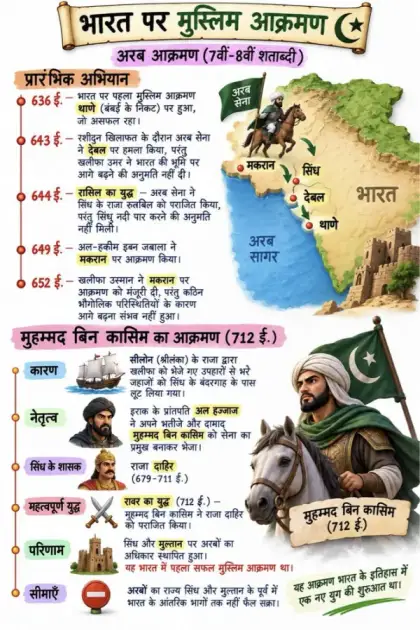
Muhammad bin Qasim invaded Sindh in 712 CE — the first Arab invasion of India.
In the Second Battle of Tarain (1192), Muhammad Ghori defeated Prithviraj Chauhan.
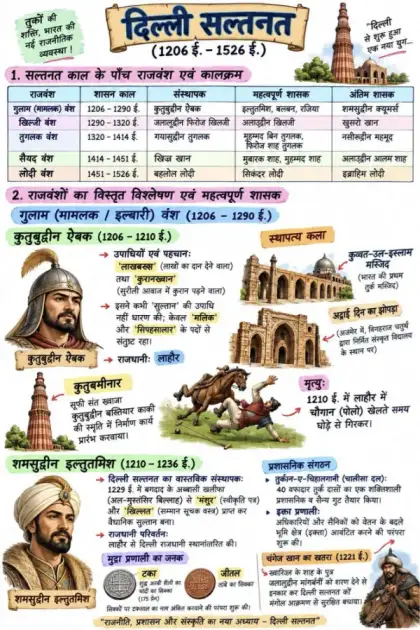
Qutb-ud-din Aibak founded the Delhi Sultanate (Slave/Mamluk dynasty) in 1206.
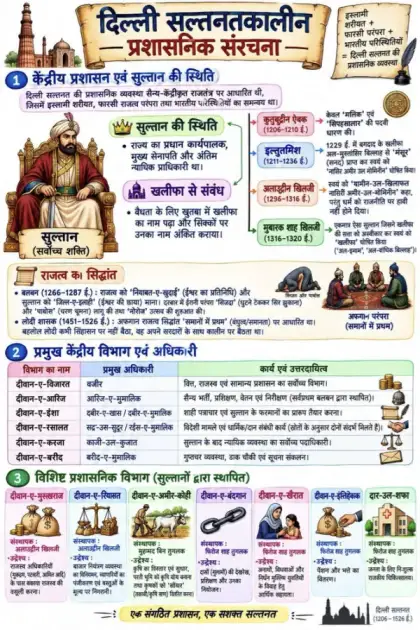
Iltutmish introduced the silver tanka and copper jital; Razia Sultan was the first woman ruler of Delhi.
Alauddin Khalji introduced market control and the branding of horses (dagh).
Muhammad bin Tughlaq shifted his capital to Daulatabad and introduced token currency.
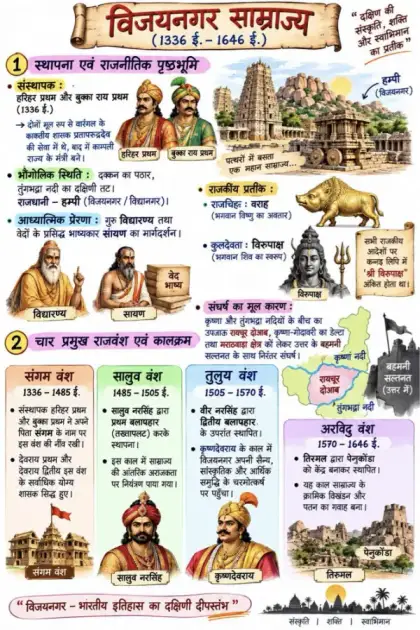
The Vijayanagara Empire was founded in 1336 by Harihara and Bukka; Krishnadevaraya was its greatest ruler.
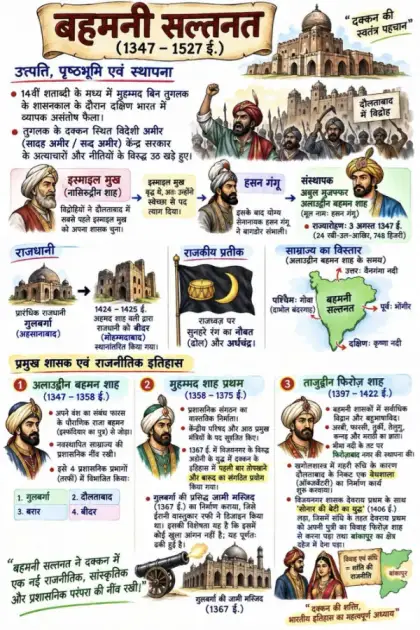
The Bahmani Sultanate was founded in 1347 by Alauddin Hasan Bahman Shah.
In the First Battle of Panipat (1526), Babur defeated Ibrahim Lodi and founded Mughal rule.
Akbar introduced the Mansabdari system and started Din-i-Ilahi in 1582.
Shah Jahan built the Taj Mahal in Agra and the Red Fort in Delhi.
Shivaji was crowned Chhatrapati at Raigad in 1674.
SSC-level notes — tap a topic to open it.
Full chapter notes, mind maps, topic-wise quizzes and mock tests for every subject — one Pro plan unlocks them all.
Learn the dynasties in order with their key rulers and important years.
Make a comparison table of administration and revenue systems across empires.
Link monuments to the ruler who built them — a favourite question type.
Revise with the free handwritten notes on this page, then practise MCQs.
Revenue terms (iqta, mansab, zabt) and "who built what" questions repeat often — revise them as flash cards.
Illustrated, exam-focused notes for quick understanding.
Revise whole topics at a glance before the exam.
Practise each topic with instant scores and explanations.
Fresh questions every day to keep revision consistent.
Tap a note to read it right here.
 PDF · 2 pagesRead notes
Handwritten notes · Hindi
 PDF · 2 pagesRead notes
Handwritten notes · Hindi
 PDF · 2 pagesRead notes
Handwritten notes · Hindi
 PDF · 2 pagesRead notes
Handwritten notes · Hindi
 PDF · 2 pagesRead notes
Handwritten notes · Hindi
 PDF · 2 pagesRead notes
Handwritten notes · Hindi