 GoodStudy
Handwritten notes
Illustrated, exam-focused notes for quick understanding.
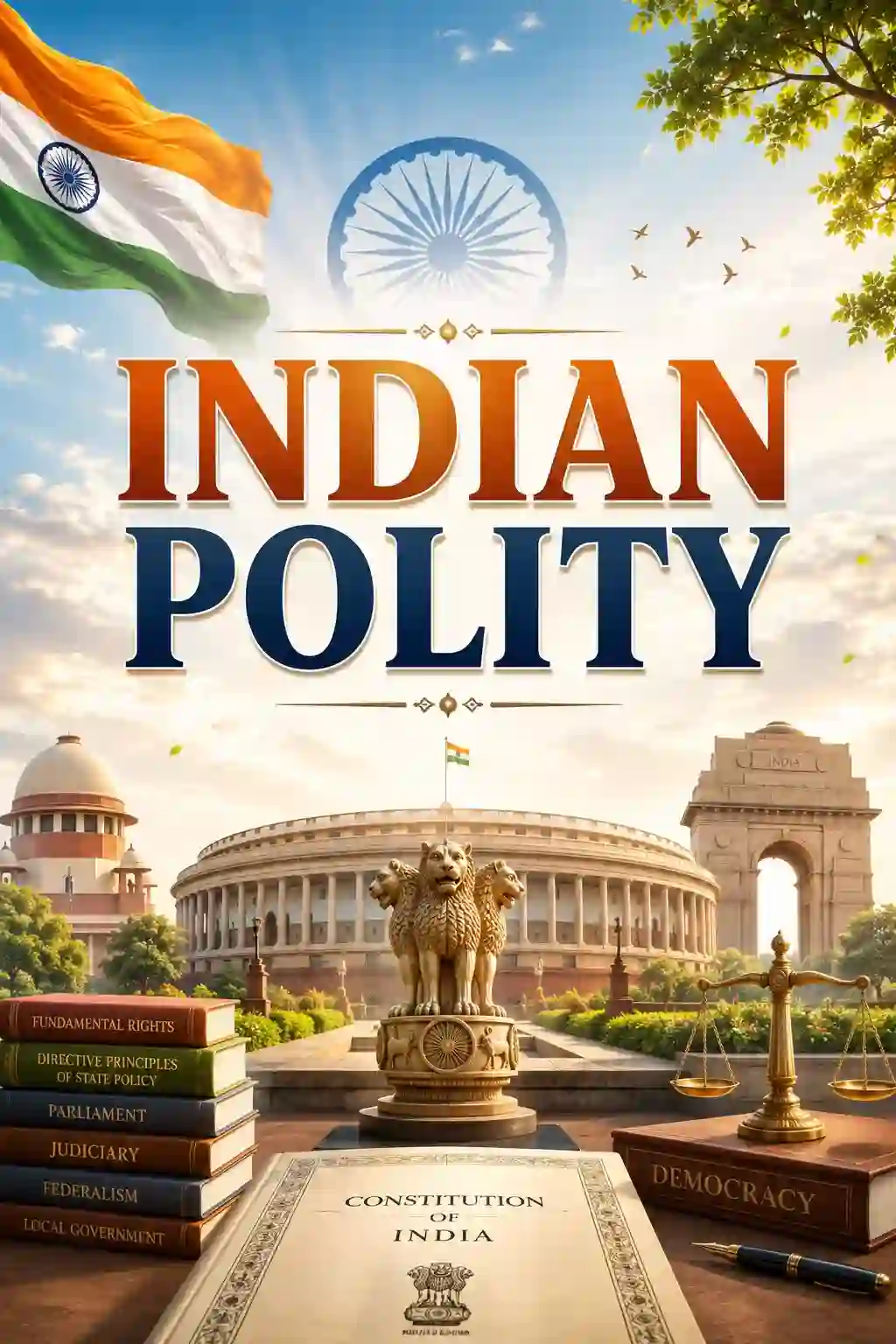
The Constitution, government and rights — explained simply.
Indian Polity covers the Constitution of India and how the country is governed — from Fundamental Rights to Parliament and the judiciary. It is one of the most scoring subjects because questions are direct and repeat often.
The Constituent Assembly first met on 9 December 1946; Dr Rajendra Prasad was its president.
Dr B.R. Ambedkar chaired the Drafting Committee.
The Constitution was adopted on 26 November 1949 and came into force on 26 January 1950.
The 42nd Amendment (1976) added "Socialist", "Secular" and "Integrity" to the Preamble.
Fundamental Rights: Part III (Articles 12–35); DPSP: Part IV (Articles 36–51); Fundamental Duties: Article 51A.
Article 32 (Right to Constitutional Remedies) was called the "heart and soul" of the Constitution by Ambedkar.
Fundamental Duties were added by the 42nd Amendment on the Swaran Singh Committee's recommendation; there are now 11.
Fundamental Rights were borrowed from the USA, DPSP from Ireland and the parliamentary system from the UK.
The Rajya Sabha is a permanent House — one-third of its members retire every two years.
Article 280 provides for the Finance Commission and Article 324 for the Election Commission.
The 73rd and 74th Amendments (1992) gave constitutional status to Panchayats and Municipalities.
A Money Bill (Article 110) can be introduced only in the Lok Sabha.
SSC-level notes — tap a topic to open it.
Full chapter notes, mind maps, topic-wise quizzes and mock tests for every subject — one Pro plan unlocks them all.
Read the Preamble and the structure of the Constitution first.
Learn important Articles by part — rights, DPSP, executive, legislature, judiciary.
Keep a list of major amendments and sources borrowed from other constitutions.
Practise Article-based MCQs daily until they feel automatic.
Article numbers and "borrowed from which country" questions are the easiest marks — revise them every week.
Illustrated, exam-focused notes for quick understanding.
Revise whole topics at a glance before the exam.
Practise each topic with instant scores and explanations.
Fresh questions every day to keep revision consistent.