 GoodStudy
Handwritten notes
Illustrated, exam-focused notes for quick understanding.
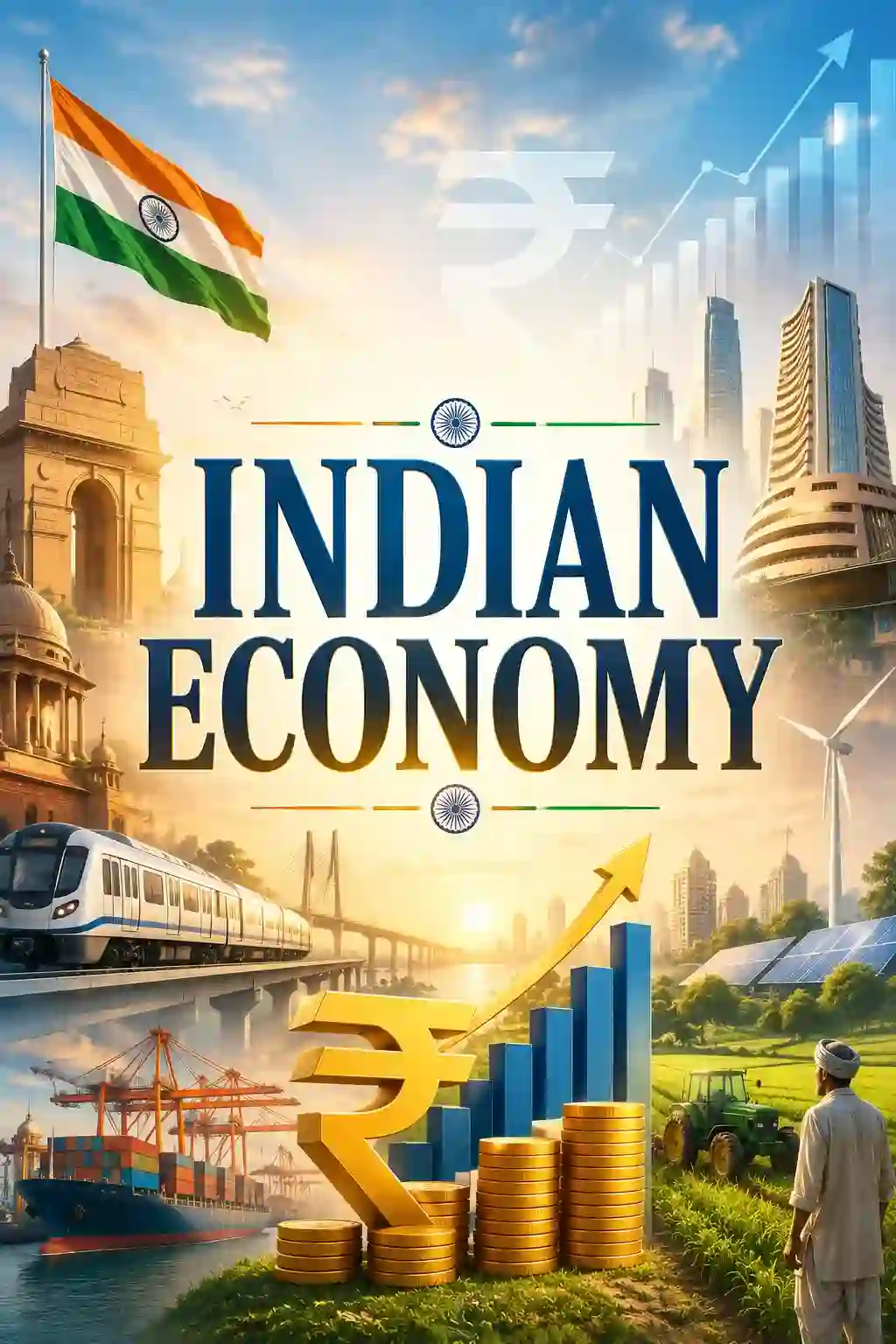
Growth, banking, budget and schemes — the economy made clear.
Indian economy explains how the country earns, spends and grows — national income, banking, inflation, budget and government schemes. It combines static concepts with current data, so regular revision is important.
The RBI was established on 1 April 1935, nationalised in 1949, and is headquartered in Mumbai.
NITI Aayog replaced the Planning Commission on 1 January 2015.
GST came into force on 1 July 2017 through the 101st Constitutional Amendment.
Repo rate is the rate at which the RBI lends to commercial banks.
CRR is the share of deposits banks keep with the RBI as cash; SLR is kept by banks in liquid assets.
14 banks were nationalised in 1969 and 6 more in 1980.
The First Five-Year Plan (1951–56) focused on agriculture and was based on the Harrod–Domar model.
The Union Budget is called the "Annual Financial Statement" under Article 112.
Fiscal deficit = total expenditure − total receipts excluding borrowings.
SEBI (set up in 1988, statutory in 1992) regulates India's securities market.
NABARD (1982) finances agriculture and rural development.
M.S. Swaminathan is known as the father of India's Green Revolution (1960s).
SSC-level notes — tap a topic to open it.
Full chapter notes, mind maps, topic-wise quizzes and mock tests for every subject — one Pro plan unlocks them all.
Get the basic terms clear before memorising numbers.
Understand RBI tools (repo, reverse repo, CRR, SLR) with simple examples.
Keep a list of major schemes with launch year and ministry.
Update your notes with the latest Budget and Economic Survey highlights.
Banking exams ask the most economy questions — pair this subject with daily current affairs.
Illustrated, exam-focused notes for quick understanding.
Revise whole topics at a glance before the exam.
Practise each topic with instant scores and explanations.
Fresh questions every day to keep revision consistent.