 GoodStudy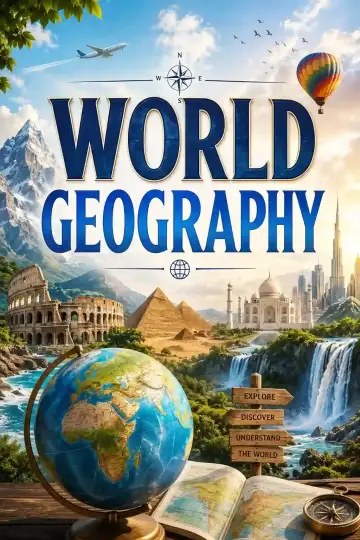
Handwritten notes
Illustrated, exam-focused notes for quick understanding.
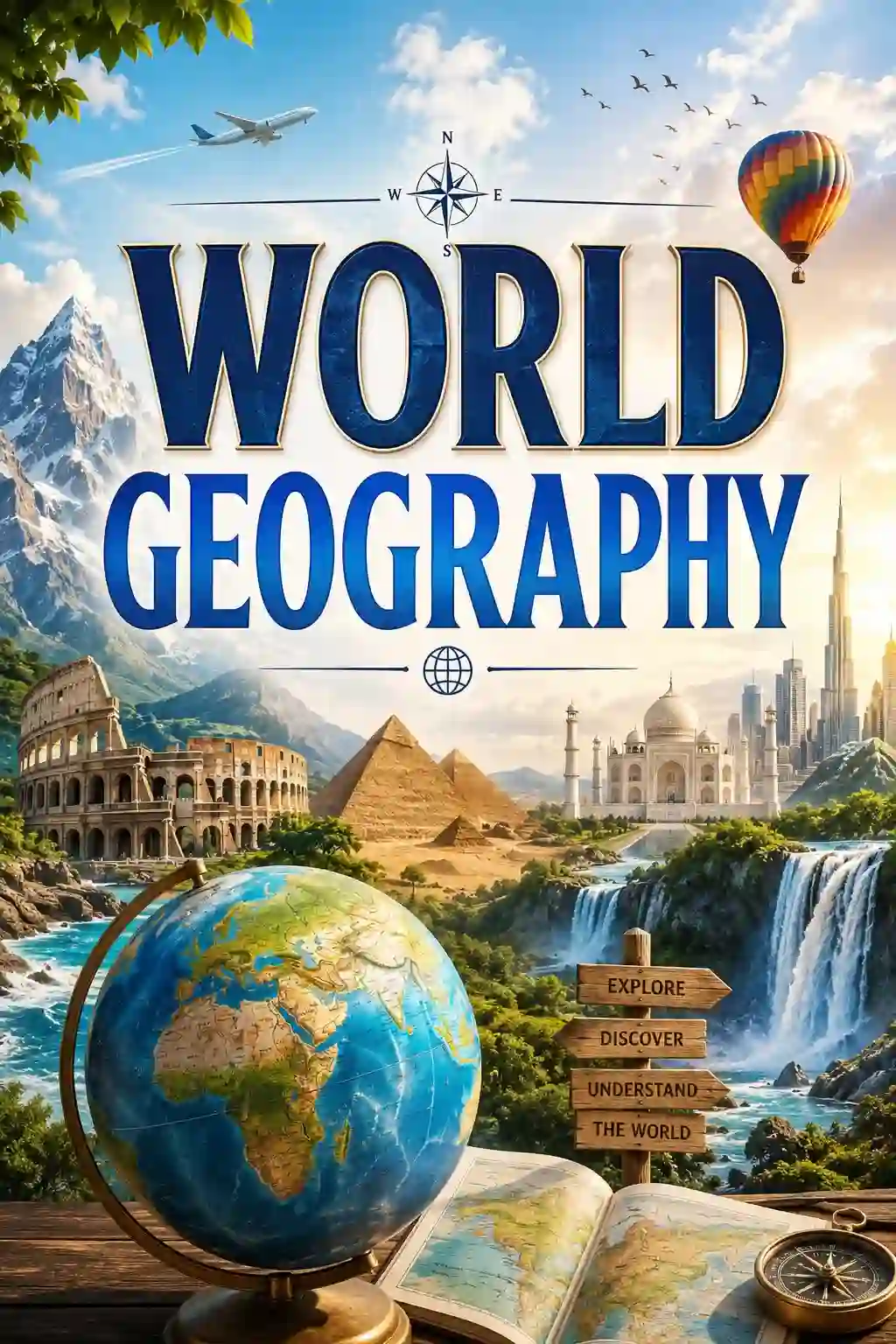
Earth's structure, climate and continents — the big picture.
World geography covers physical geography of the Earth and the major features of each continent. Questions come from the solar system, Earth's interior, atmosphere, oceans and important world locations.
The Earth's axis is tilted at about 23.5°.
The Prime Meridian (0°) passes through Greenwich, London; the International Date Line runs roughly along 180°.
Every 1° of longitude equals 4 minutes of time.
Weather occurs in the troposphere; the ozone layer lies in the stratosphere.
The Pacific is the largest and deepest ocean; the Mariana Trench is the deepest point on Earth.
The Nile is the longest river; the Amazon carries the largest volume of water.
Mount Everest (8,849 m) is the highest peak in the world.
The Sahara is the largest hot desert; Antarctica is the largest desert overall.
Asia is the largest continent and Australia the smallest.
Grasslands: Prairies (North America), Pampas (South America), Steppes (Eurasia), Veld (South Africa), Downs (Australia).
The Gulf Stream is a warm ocean current in the North Atlantic.
The Strait of Gibraltar connects the Atlantic Ocean with the Mediterranean Sea.
SSC-level notes — tap a topic to open it.
Full chapter notes, mind maps, topic-wise quizzes and mock tests for every subject — one Pro plan unlocks them all.
Start with physical concepts (earth, atmosphere, oceans) before places.
Use an atlas — locate every place you read about.
Make lists of "largest / longest / highest" in the world.
Practise map-based and match-the-following questions.
Local winds, ocean currents and grasslands are asked as matching questions — revise them as tables.
Illustrated, exam-focused notes for quick understanding.
Revise whole topics at a glance before the exam.
Practise each topic with instant scores and explanations.
Fresh questions every day to keep revision consistent.