 GoodStudy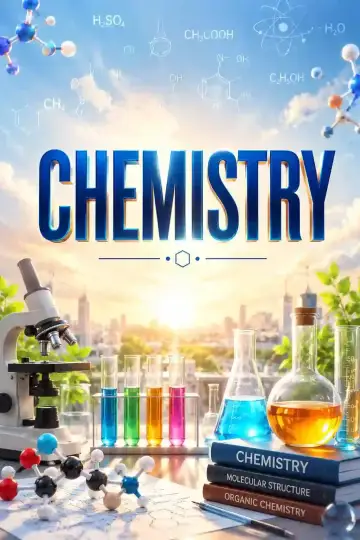
Handwritten notes
Illustrated, exam-focused notes for quick understanding.
Matter, reactions and everyday chemistry — clear and exam-focused.
Chemistry covers the structure of matter, chemical reactions and the chemistry of daily life. Questions focus on facts, common names, formulas and applications.
The electron was discovered by J.J. Thomson, the proton by Rutherford and the neutron by Chadwick.
The modern periodic table (Moseley) is based on atomic number and has 118 elements.
pH 7 is neutral; below 7 is acidic and above 7 basic. Human blood has a pH of about 7.4.
Baking soda: NaHCO₃; washing soda: Na₂CO₃·10H₂O; bleaching powder: CaOCl₂.
Plaster of Paris is CaSO₄·½H₂O; quicklime is CaO and slaked lime is Ca(OH)₂.
Mercury is the only metal that is liquid at room temperature; bromine is the only liquid non-metal.
Diamond and graphite are allotropes of carbon; graphite conducts electricity.
Brass = copper + zinc; bronze = copper + tin.
Stainless steel is an alloy of iron with chromium and nickel.
Vinegar contains acetic acid, lemon citric acid and curd lactic acid.
Ozone (O₃) in the stratosphere protects Earth from ultraviolet rays.
Helium, the lightest noble gas, is used to fill balloons.
SSC-level notes — tap a topic to open it.
Full chapter notes, mind maps, topic-wise quizzes and mock tests for every subject — one Pro plan unlocks them all.
Start with atomic structure and the periodic table — the rest builds on them.
Make a list of common names and chemical formulas.
Learn the pH of common substances and indicator colours.
Revise with MCQs on everyday chemistry — soaps, fertilisers, fuels, medicines.
Common names (baking soda, bleaching powder, plaster of Paris) and their formulas are asked again and again.
Illustrated, exam-focused notes for quick understanding.
Revise whole topics at a glance before the exam.
Practise each topic with instant scores and explanations.
Fresh questions every day to keep revision consistent.